
What is your philosophy of education? Are you simply passing a torch between generations? Or is teaching just a relationship between an expert and a novice? Both questions may hold some truth. However, I see teaching as something that is much more complex. My philosophy in regards to teaching is that the educator must endeavor to engage the students’ thinking and creativity by placing their own heart and soul into each particular lesson.
The Role of Education
Education serves us many purposes in a variety of settings. For example, a child growing up deep in the Amazon basin may never see the inside of a school, may never know what a textbook or pencil is, but they will still become educated. In modern Canada, children will attend brick and mortar schools and learn to use computers. While the difference may be obvious, the similarities are equally recognizable. The child in the informal education and the child in the formal education are both challenged to think and be active in ways that are new to them.
Education is a process whereby new ideas, thoughts and activities are attempted, developed and experienced. Education serves us countless opportunities to explore new ideas and subject areas while allowing us to reflect and grow from the new material learned. Education allows individuals to build relationships with their peers, their superiors and their inferiors. By building relationships with others, it allows children to learn to work as a team and builds a sense of community in the classroom that is safe and respectful. Education provides young people the opportunity to gain new knowledge and build on old knowledge to allow for individual growth. Education is much more than simply sitting in a classroom.
The Role of the Educator
The educator takes on many different roles to provide students with a variety of resources. The educator is an authority figure where he or she ensures that students are abiding by the classroom rules, are in a safe environment and are respecting each other. Just as important, the educator is also someone who is nurturing to students and is accepting to those who are different, who think differently, and may have to adjust due dates, lectures, activities, etc. The educator might also take on the role of a therapist where students feel comfortable enough to open up to the educator about personal issues they need help resolving, which also means the educator must be available to students outside of instruction time.
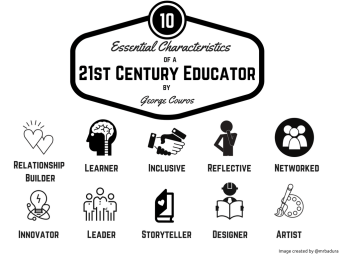
Educators must also be adaptable because not every student learns the same way; therefore, every lesson should be taught differently to reach the students’ individual learning needs. In the Good and Wang (2002) article, they quote Smith (1995) who discusses how children will often fail when learning a specific skill, and for children to reach their full potential teachers must engage students through interesting and comprehensible activities. Activities and lessons may not reach the educator’s expectations during the lesson and therefore the educator must be willing to make the necessary changes for the sake of the students. Educators are to help prepare students for their future and should also be a positive role model for students to look up to.
Diversity in the Classroom
Some refer to diversity as ethnic backgrounds. However, I think of diversity as the students’ individual needs. I plan on using the resources that are available to me. For example, in modern Canadian classroom, almost each room one will find a Smartboard, at least one computer, and perhaps even an iPad. I will allow students to use laptops to benefit their learning and I hope to also use technology as much as possible. Technology can be used to reach each individual student’s learning needs and helps to engage students in the lesson.
I plan to work with students one-on-one and in small groups to understand where they are at academically and what I need to do to provide to the students’ development. Visuals, such as posters and examples, will be hung up on the classroom walls for students to refer to with ease. Bookshelves will hold an array of books such as dictionaries, thesauruses, and many chapter books, for students to have access to when doing their work or for something to read after they have finished their work. Different social, cultural, and economic factors may weigh on students’ ability to learn. I would try to take these background factors into account when trying to help a student succeed.
Community of Thinkers
As a community, I will encourage students to work together towards understanding a concept. It is through the sharing of ideas and theories that will allow them to have a comprehensive understanding of a concept. Rather than retreat into themselves and try to work out a problem isolated from others, I will allow for students to collaborate ideas and share their thoughts. My community will be a positive environment where students will feel safe and respected when sharing ideas with each other and with the class as a whole. Desks will be in small groups of about four to allow students to easily communicate with each other and work together as a team. The groups of four will also have opportunities to collaborate with the other groups in the classroom as well. We will have open discussions where students will have the opportunity to share and build upon ideas. This method of collaborative learning will enhance each student’s feeling of belonging, value and importance within their community of thinkers.
How Children Learn
Children are active learners and learn best through being involved in activities and in the lesson itself. I remember activities and lessons I did in elementary school when I was actively involved. Unfortunately, there are not many lessons I remember because most of the lessons included sitting at our desks doing independent work or listening to the teacher read from a textbook; I was not engaged in the lesson and what I learned did not effectively stay with me. Good and Wang (2002) quote Smith (1995) who believes that teachers and students should focus on doing, not learning. He also continues to discuss how children become engaged when they get to experience, perform, construct, produce, create, etc. the lesson. I agree with this statement because it is the lessons I was actively involved in that I remember to this day. Children should have some choice and say in what they are learning. For example, instead of having a project where each student must design and create the same thing, allow for some individuality by letting the students to creatively manipulate the project for a variety of outcomes. I hope to create lessons that students find interesting, are active and are engaged in.
My Teaching
Because children are active learners, my teaching will not include students sitting independently at their desks doing page after page of seatwork. It will also not include me standing at the front of the room reading from a textbook. Instead, my teaching will include project-based learning where students will do research and construct their own learning with my assistance. It will also include modeling.
When spending time in a grade one classroom for field experience I observed the teacher perform a three step-modeling lesson with her students. For the math lesson, the students gathered around and observed the teacher give an example of the activity. Next, the children were to do the activity themselves. After a given amount of time, they came back together as a class and discussed their findings. While the students were doing the activity, the teacher’s example was left available for the students to refer to. I found this to be very effective because they were able to discuss a variety of findings since each student, or pair of students, did the activity a bit differently than the rest of the class. They were also able to discuss miscalculations and mistakes, which I also believe to be an asset because children can learn from their mistakes. It also allowed for children to collaborate with each other and experiment with the activity. My teaching will not be the traditional factory-model teaching, but instead a more constructive way to educate young people.
Relationships
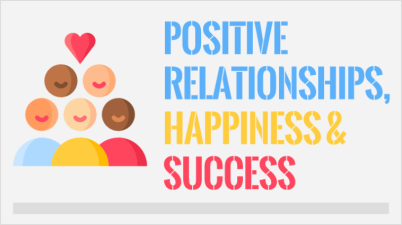
Students will often ask why they have to learn a certain concept. I hope to bring what we learn in the classroom out into the community with my students. For example, I hope to be a French teacher and take my students to different bilingual work places in the community. I hope to develop professional relationships with the parents of my students by letting parents know about their child’s successes. Usually, when parents receive a phone call from their child’s teacher it is to hear unfortunate news and rarely about something positive. I hope to focus on the positives and let parents know when their child’s individual milestones has been met. Not only do students benefit from collaborating with each other, but teachers benefit from collaborating with other teachers as well. I hope to develop positive relationships with colleagues to collaborate and share teaching ideas, styles, etc. I hope to build a positive relationship with administration by devoting my personal time to volunteer with extra-curricular activities for the students. By collaborating with the community, parents and administration, is the most effective way to develop learning strategies that best suits each student individually.
Quote
“When a flower doesn’t bloom, you fix the environment in which it grows, not the flower”. This is a quote I found by Alexander Den Heijer and I relate this quote to education because children are like flowers. When a child cannot read a book, one does not automatically assume the child is dyslexic, but instead finds new ways to help the child learn to read. I remember my teachers often blaming a student for not understanding a concept. Instead, teachers should ask themselves ‘how can I change the lesson for the student to understand?’ and I am confident the teacher will find that he or she is building a better relationship with the students. Education is not a one-size-fits-all environment and changes must be met to help each student reach their full potential. My teaching philosophy could best be compared to a gardener: tend to your charges as best you can, working diligently with what is at your disposal and adapting to the things that cannot be changed, all with the goal of helping your flowers bloom to their fullest potential.
Please leave a comment! I would love to read your thoughts and opinions, as well as your teaching philosophy!
References
Alexander Den Heijer Quotes. (n.d.). Retrieved November 3, 2015, from http://www.jarofquotes.com/view.php?tag=alexander den heijer
Good, J. M. & Whang, P. A. (2002). Encouraging reflection in preservice teachers through response journals. The Teacher Educator, 37(4), 254-267.
 Teaching & Assessing